


FROM POTENTIAL TO POWERSCALING INDIGENOUS PEOPLES’ NATURE-BASED FOOD
- Apr 27
- 4 min read
Updated: May 4
In 2021, the United Nations convened the World Food Summit to champion nature-positive food systems. As a member of one of the Summit’s Preparatory Committees, The Indigenous Partnership for Agrobiodiversity and Food Sovereignty (TIP) that I lead from Rome, Italy advocated for a profound truth: Indigenous Peoples’ food systems are, by definition, nature-based. Though often ignored, they are the essential drivers of the future many of us envision.
To prove this, we applied FAO’s agroecology evaluation tools to a study spanning 500 households located in 16 diverse landscapes across Thailand, India, Kenya, and Mexico. The households from Meghalaya that we studied came from Dewlieh, Umsawwar, Plasha and Darechikgre.
Our findings were clear: these food systems aren't just "farms"; they are mosaics of life; these systems don’t just work—they thrive. The secret isn't just technique; it is a deep, relational connection to the land and a cultural value system of "caring and sharing", Tip Briew, Tip Blei as the Khasis say.
But we did not want our findings to just sit in a report. To turn these insights into action TIP, in 2024, developed an Outcome Framework built on four development pillars: biodiversity, nutrition, nature-based livelihoods, and climate resilience.
By 2025, we started to transition from framework to implementation developing “templates of solutions” that would operationalise these pathways. We were fortunate to get some funding from the Rockefeller Foundation, USA and CS Fund, California, USA, to begin building "solution templates" directly with communities. Our first initiative started in Meghalaya. Working with NESFAS, our local partner, we brought together village elders, local chefs, and nutritionists. Together, they did something incredible. They took the "wild edibles" gathered from the local landscape and wove them into school meal programmes.
Right now in Meghalaya, 2000+ children are enjoying a lunch that features 13 different species of wild plants. The number is growing every day. These aren't just meals; they are the bounty of their ancestral lands served on a plate.
This is a living circular economy. When a local mother gathers wild edibles to sell to the school, or a grandmother teaches students how to tend the school garden, a cycle of health and wealth begins. The children grow up healthy, knowing that their landscape is their provider.
Our results also show that the model we developed is both high-impact and scalable. NESFAS is meeting FAO’s 'ten food group' diversity standards, slowly strengthening village economies, and thereby ensuring social sustainability through community ownership.
What we’ve learned is simple but profound: the answer to our global 'development challenges' isn’t always a new technology. Often, it is a return to a deep, relational connection with nature. By supporting Indigenous-led models, we aren’t just conserving biodiversity—we are nourishing the next generation with the wisdom of the past.
Between 2024 and 2025, the Government of Meghalaya and NESFAS joined forces to train over 12,000 cooks. Senior IAS Officers like Swapnil Tembe and Isawanda Laloo became strong supporters of these pilot initiatives. We are slowly turning school meals into a grassroots revolution. But our work goes deeper than the kitchen.
Through partnerships with the Biodiversity Board of the Government of Meghalaya and The Nature Conservancy, NESFAS is working with communities restoring degraded landscapes using 'People’s Perspective Management Plans.' We are blending Indigenous wisdom with the biocentric restoration approach of the Indigenous Peoples’ Unit in FAO, Rome.
And most importantly, we are engaging the youth. Following TIP’s global webinar in 2025, young fellows in Meghalaya identified ten core grassroots innovations—from honey forests to nitrogen-fixing trees—proving they are the researchers and leaders of tomorrow.
By registering 21 Agroecology Cooperatives, NESFAS is also empowering local Mei-
Ramew cafes and schools to buy local and keep wealth within the community. The circular economy we are promoting has also attracted the attention of global bodies such as the International School Meals Coalition and the Indigenous Peoples Food Systems Coalition. We are gradually proving that Indigenous food systems are not a relic of the past—they are the key to our future.
Three vital lessons stand out:
First, evidence matters. We used the FAO’s TAPE method to prove that these undervalued systems work. As AI use grows, Indigenous Peoples' advocacy must increasingly develop hard evidence but blend it with a deep commitment to the unique values and systems of Indigenous Peoples.
Second, building bridges works. Our 'Outcome Framework' allowed science and Indigenous knowledge to collaborate as equals and thereby co-create new knowledge.
Third, having an appropriate policy environment matters. This initiative succeeded because the State Government of Meghalaya and national corporate bodies such as Tata Communications, Rural Electrification Corporation, LIC HFL and others, through India’s Corporate Social Responsibility regulation stepped in to provide the needed financial support.
Our partners in Thailand, Kenya, and Mexico are also leading the way toward a nature-positive world. To turn their vision into action, they too need the resources to implement the Outcome Framework alongside the communities who call their lands home. Indigenous food systems are not just traditional practices; they are sophisticated, scalable blueprints for a sustainable modern world. We invite policymakers and funders to join us.
A sustainable future isn't a dream—it's a choice we must make right now, especially as we face the current fossil fuel challenges. By backing Indigenous Peoples-led solutions, we bridge the wisdom of the past with the promise of the future.
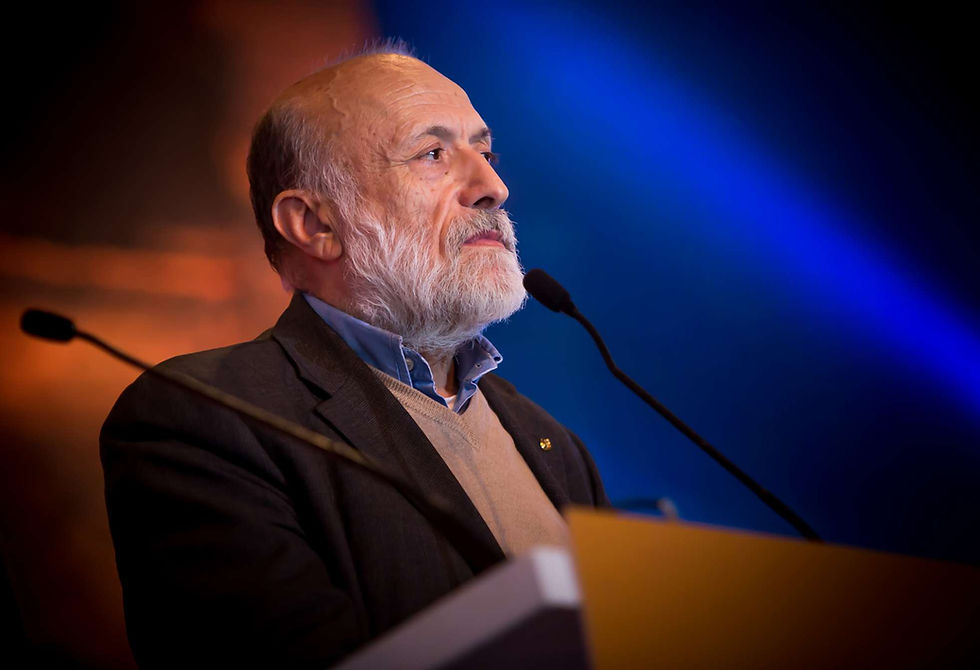
By Phrang Roy, Coordinator of TIP, Rome and Founder of NESFAS. This article is based on a speech given on the 21st April 2026 at the UN Permanent Forum on Indigenous Issues Side Event, New York.
Watch full speech below:


Comments